
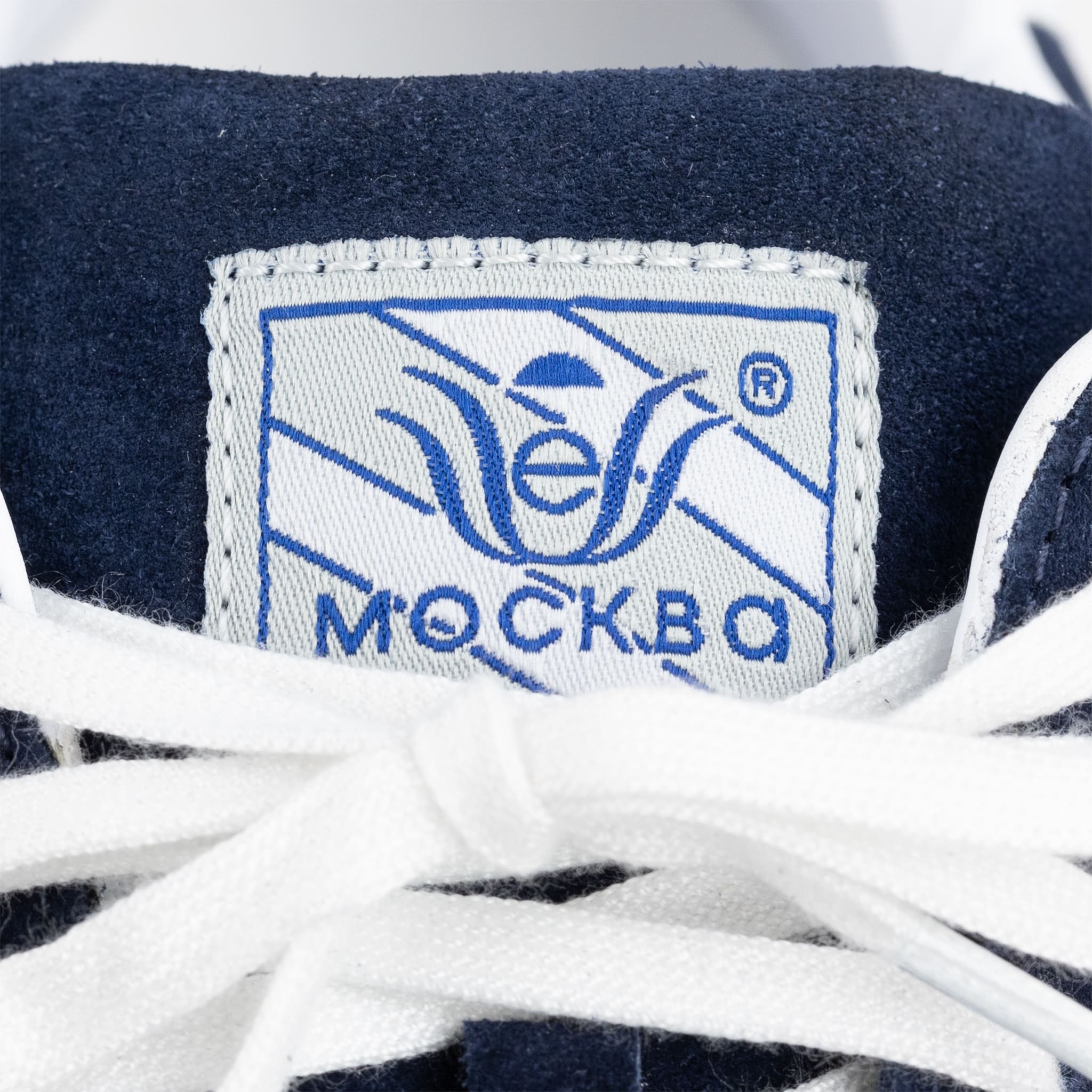
In talking about remaking the "Mockba", a soviet replica of the beloved "Gazelle" shoe design, we had to look into what they were cloning: Adidas.
What makes a fashion brand so beloved, it becomes part of a nation's identity? It starts to make a whole lot more sense when you hit "rewind" and see where Adidas got their start as a sportswear giant.
What we found out is that it has to do with two of the most controversial Olympic Games events in history.

Germany, 1936
Adi & Rudolf Dassler out of the "Dassler Brothers Shoe Factory" were running a mildly successful family business when they began to take a look at the state of track and field footwear, mainly in the development of track spikes.
These spikes would prove to be a crucial innovation in the Berlin Olympics in 1936 - A controversial games for both who was in power during that time and the agenda that was being pushed with heavy symbolism.
All in the effort to out-do the Los Angeles games in '32, it would be Germany's own Dassler brothers that ended up being a pivotal part in the US's success story in Berlin.
James Cleveland Owens (A.K.A. Jesse Owens), an African American athlete, would be persuaded by Adi Dassler to try out his hand-made and allegedly non-traditional spiked shoe design at the Olympic Games.
Owens would go on to win four gold medals, in the 100 & 200m sprint, 4x100 relay, and the long jump. This streak of golds instantly carved his name into the history books as the most successful Olympian at the '36 games.
And it goes mostly without us elaborating any further, but he's regarded as one of if not the greatest athletes in track & field history.
This was excellent news for the Dassler Brothers. It cemented their reputation as the premiere sportswear suppliers for not only athletes, but Olympians. 200,000 pairs of shoes would roll off the assembly line every year.
Of course, the success was a little bit short-lived with World War II beginning shortly after. The Dassler factory would just barely scrape by as nationalization of factories would force them to make Anti-Tank weapons for a last-ditch defense of the Reich's shrinking borders.
The factory would be nearly destroyed by American ground forces, were it not for Mrs. Dassler - she allegedly reminded the Americans that they really only wanted to make shoes, and we're guessing she mentioned that they helped one of America's greatest athletes.
The factory was spared, and occupying Americans would go on to be be very, very good customers.
Adi and Rudolf had a bit of a falling out soon after. Rudolf would form competing juggernaut "Puma" but Adi would not be stopped in his conquest of the sportswear world.
Adidas was in the empire-building stage of their business, not afraid to take on interesting customers across borders, and as it would happen, across the Iron Curtain.

Russia, 1980
The postwar world would slowly turn into a nuclear Mexican-standoff between the two superpowers: USA and Russia.
The Olympics already had a history of being a quiet demonstration of superiority, as we just spoke about with the '36 Olympics in Berlin being a bit on-the-nose about that. The cold war made it a stage for fierce competition between the superpowers and their allies. The idealism of the Olympics being the one place we can all compete in a sportsmanlike manner, tossed completely out the window.
The Olympic Games in the twilight hours of the cold war were to be held in Moscow, and protests calling for boycott immediately erupted in the United States as we decided we'd host our own Olympics the same year.
The Kremlin wanted to show the superiority of their athletes in style for the 1980 Olympiad. Dassler was willing to play ball beyond national borders, so Adidas became the official manufacturer for the Moscow Olympics. But the Communist Party adamantly objected to Soviet athletes parading capitalist trademarks on international television.
So, they came to a compromise: The word “Adidas” would be removed, but the three stripes untouched. Tracksuits instead would be emblazoned with “CCCP” proudly across the chest with the Adidas Trefoil.
Another problem: importing was bleeding the party’s wallet dry. Naturally, they secured manufacturing licenses for everything to be made, sans the word “Adidas”, right in the good ‘ol USSR (Mainly Moscow, Kiev, Yerevan, and Tbilisi).
The Russian Athletes who'd wear them would somehow do very well in their home-country's games, too. The image of their athletes adorned with gold medals was burned into the Russian populace as a source of national pride, and the three stripes were an instant phenomenon overnight.
Workers clambered for Adidas shoes & tracksuits. They'd wear tracksuits to and from a hard day's work, going for a stroll in the park, getting into all kinds of trouble with your friends. The Hooligan punk youths or "Gopniks" made it their uniform. Those stripes meant something far greater than a German brand that dared to tread it's Gazelles into the USSR.
Finally, it would seem, someone wanted to try and be friends with the "bad guys" Instead of pointing nukes at them. And it worked marvelously.

The Rug Gets Pulled
But all that demand meant a lot of money for German business, right?
The “Moskva” licensed siblings to the Adidas lineup were an instant phenomenon in Russia, with people wearing their goods everywhere. Genuine licensed “Moskva” (“MOCKBA” in cyrillic) adidas would cost the average worker twice the average monthly soviet salary, yet demand was insatiable. A faltering economy as the USSR entered its twilight years meant that the knockoff market erupted.
Like we mentioned, Russia eagerly invited brands like Adidas to start producing in Russia under new licensing as a condition of being represented in the games — a move that made sense on paper, until after the games.
The Factories were nationalized. The tooling didn't go anywhere but the companies were unceremoniously booted from the USSR once more.
One of their most popular shoes, the Gazelle or previously the "Olympiade" would be copied, and copies of those copies would appear, and then copies of copied copies would appear. Tracksuits with differently colored stripes, more stripes, or less stripes. The results go from downright ugly to ironically hilarious.
People needed their three-stripe fix. And manufacturers gaining steam in soviet-friendly China meant a steady supply of dirt cheap “Abibas” and “Odidos” Mockbas.
These clones showed up on feet everywhere from small villages to the mountains of Afghanistan on soviet troops, mixed right in with the real-deal “Moskvas”. It became an icon so powerful, it defined an entire Eastern European aesthetic that’s alive and well today.
So, a watchful eye will notice in many historical photos, but especially those from the Soviet Occupation of Afghanistan, mysteriously low-quality Gazelles, or some shoes with fewer or greater than the golden three stripes appear all over the place.
They're no mockery of Adi's legacy, they're just Mockbas.
Poverty didn’t stop people from wanting to celebrate an Icon, and the olympic legacy would spiral out of control into full cult status with the birth of “Gopnik Culture” - so we pay tribute not to the original three stripes, but to the 2 and 4 striped “Moskvas” that survived the USSR’s collapse and gave birth to the "Gopnik" aesthetic.
Share:
Stealth Unveiled
Red Dawn: A Legacy